


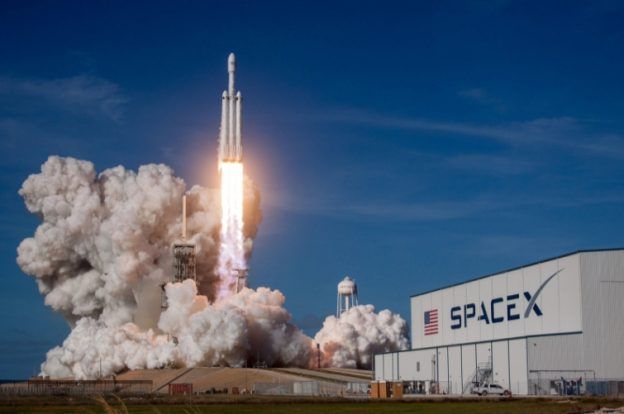
After SpaceX’s IPO (expected June 2026), the supply chain market will feel ripple effects across aerospace, technology, and logistics sectors. Also this IPO will accelerate demand for aerospace and satellite supply chains. Singapore benefits in logistics and AI integration, Shenzhen in electronics manufacturing, and Tokyo in advanced materials and aerospace partnerships. Together, these hubs form a triangle of opportunity in Asia’s supply chain market.
Here’s how it is likely to unfold:
Direct Supply Chain Impacts
Aerospace Manufacturing
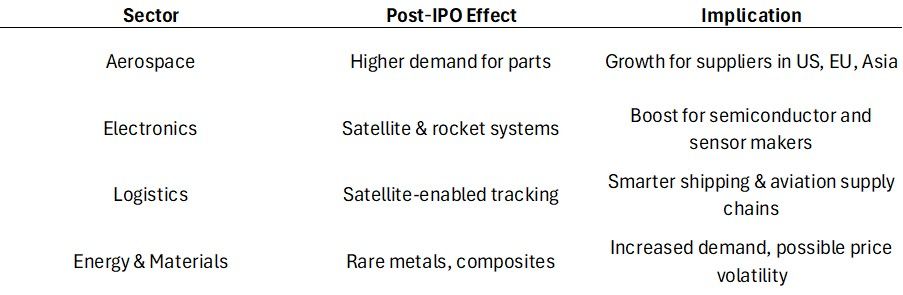
- Increased demand for rockets, satellites, and spacecraft components will boost suppliers of metals, composites, avionics, and propulsion systems.
- Tier‑1 and Tier‑2 suppliers (engine parts, electronics, ground systems) may see higher order volumes.
Satellite & Communications
- Starlink expansion will require mass production of satellites, antennas, and ground stations.
- This strengthens supply chains in electronics, semiconductors, and advanced materials.
Global Logistics
- SpaceX’s cargo and launch services could reshape international logistics, offering faster satellite deployment and new space‑based communication routes.
- Shipping and aviation industries may integrate satellite connectivity into operations.
Indirect Market Effects
Capital Inflows
- IPO proceeds will fund R&D and manufacturing scale‑up, creating new contracts for suppliers worldwide.
Competitive Pressure
- Other aerospace firms (Blue Origin, Boeing, Lockheed Martin) will accelerate supply chain investments to keep pace.
Technology Diffusion
- AI, robotics, and automation in SpaceX’s factories may set new benchmarks for supply chain efficiency.
Global Supply Chain Outlook
Takeaway
SpaceX’s IPO will not only open investment opportunities but also accelerate innovation and demand across aerospace and tech supply chains. The biggest beneficiaries will be suppliers of advanced materials, electronics, and logistics firms integrating satellite connectivity.