Global trade is expanding rapidly, and customs authorities face mounting pressure to process shipments faster while maintaining compliance and security. Artificial Intelligence (AI) is emerging as a game changer, transforming customs operations by automating repetitive tasks, enhancing risk profiling, and optimizing tariff classification.
Automated Document Processing
Traditionally, customs clearance required manual review of invoices, packing lists, and certificates of origin, an error‑prone and time‑consuming process. AI now uses OCR and Natural Language Processing (NLP) to instantly extract data from unstructured documents and emails. These systems can cross‑validate information across multiple documents, flagging discrepancies in real time.
Intelligent Tariff Classification
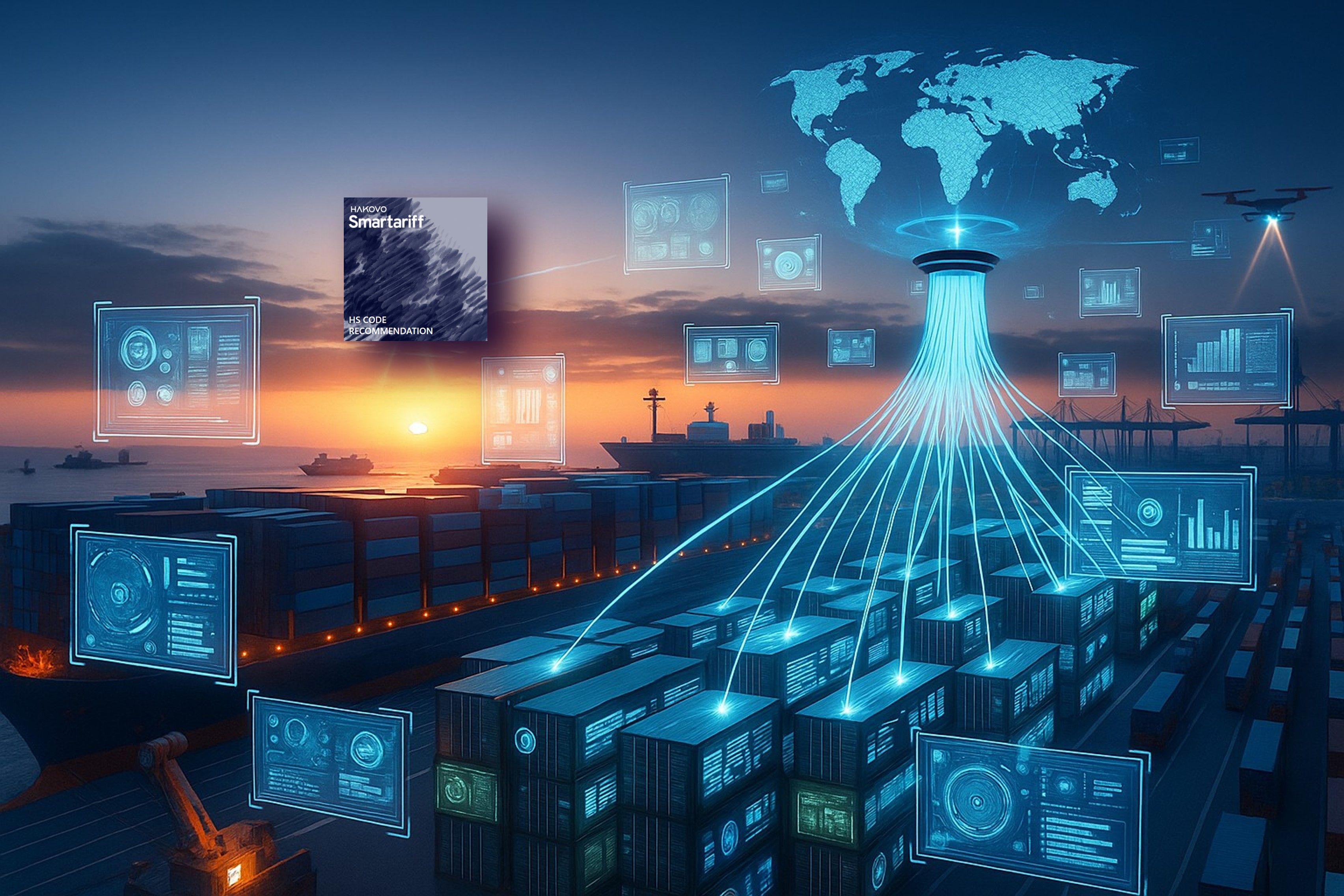
Determining the correct Harmonized System (HS) code is one of the most complex aspects of customs. AI engines analyze product descriptions, specifications, and even images to suggest precise HS codes. With continuous learning, these systems adapt to regulatory changes and improve accuracy over time, reducing costly misclassifications.
Risk Management and Restricted Item Detection
AI enables customs authorities to move from random manual checks to data‑driven risk assessments. It detects anomalies in trade records, identifying invoice fraud, smuggling, and misdeclarations based on historical data from buyers, sellers, and commodities. AI‑powered document scanning solutions further enhance the detection of concealed restricted or hazardous items, outperforming traditional human inspection.
Supply Chain Monitoring
By integrating AIS data with vessel tracking, AI connects customs operations with global supply chains. Predictive analytics anticipate bottlenecks and assess risks such as port congestion before vessels arrive at their final destination, enabling proactive decision‑making.
"AI is not replacing customs professionals, it is empowering them". By offloading repetitive administrative tasks, AI allows authorities and brokers to process shipments exponentially faster while maintaining compliance. The future of customs lies in AI‑driven efficiency, accuracy, and security, ensuring smoother global trade flows.
At HAKOVO, we have unified these capabilities into a single platform, enabling AI‑powered customs operations across ASEAN. By combining document automation, intelligent HS code classification, risk detection, and supply chain monitoring, HAKOVO provides a comprehensive solution that helps businesses and authorities achieve faster, smarter, and more compliant trade processes.
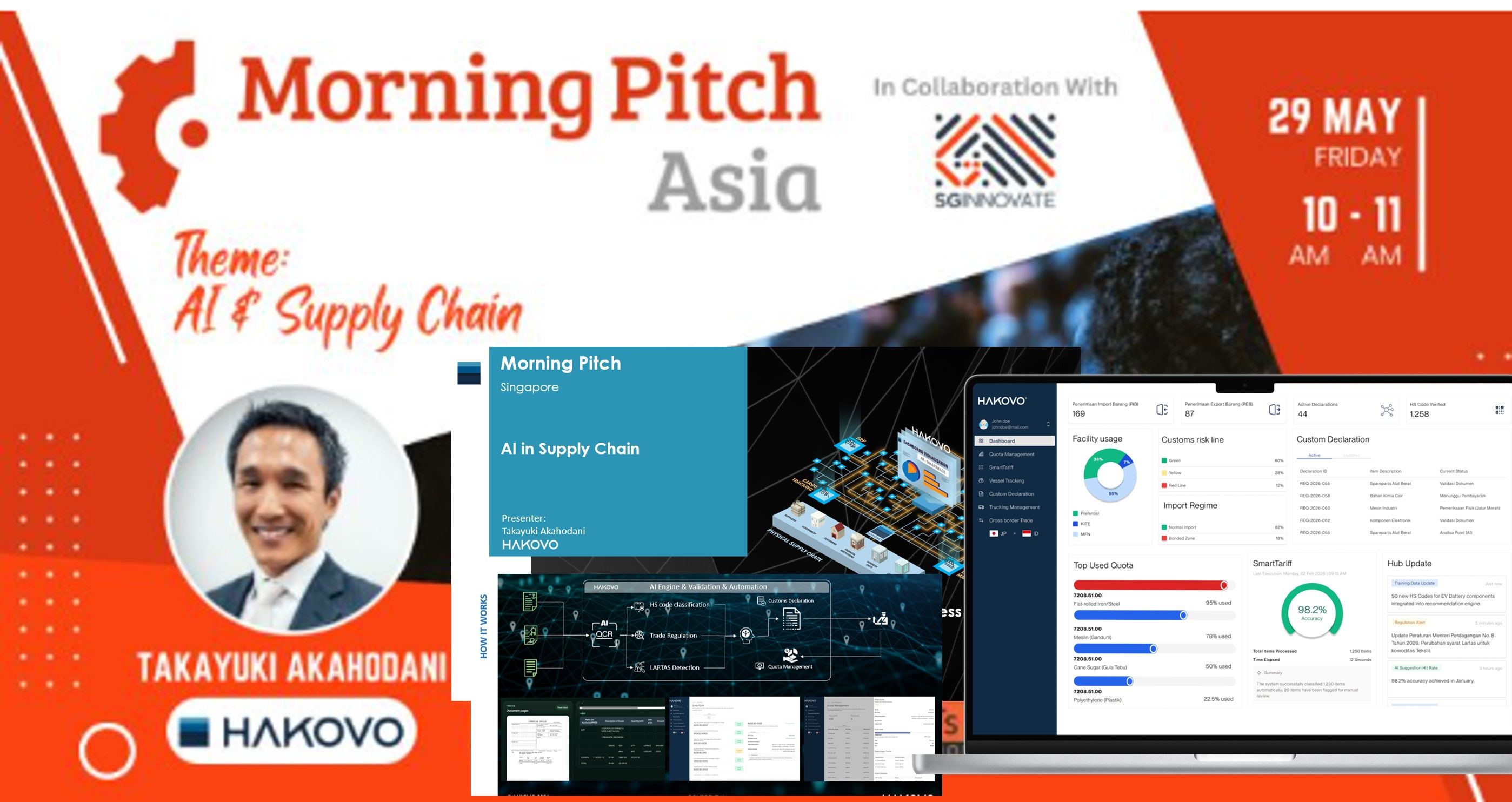
Recently, HAKOVO had the opportunity to pitch at the Morning Pitch session on AI + Supply Chain organized by Deloitte in Singapore. Morning Pitch is a fundamental platform within Deloitte for growing both local and global startup networks across Singapore, India, Taiwan, Japan, Vietnam, Indonesia, Korea, and China. Our Founder & CEO, Mr. Taka, delivered a strong pitch and successfully connected with potential partners and investors, further strengthening HAKOVO’s position as a leader in AI‑driven customs innovation.