


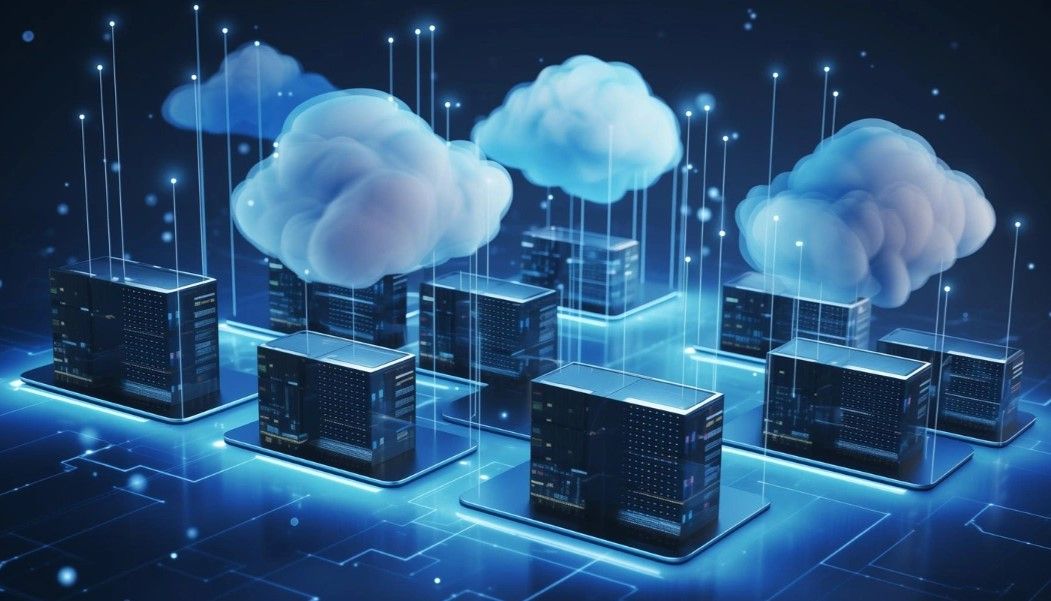
Recent years have been marked by the rise of cloud technology; a global network of remote services that operates as a unique ecosystem, generally associated with the Internet. There are countless on-demand service providers offering space in this cloud, and this expanding market has led to the democratisation of access to these tools, which are now accessible to any organisation.
When you use a cloud server, you are storing your data in a shared virtual environment. In contrast, the traditional, or on-site, server that is housed on your premises is either managed by your own IT staff or outsourced to another IT provider. So, which is better: cloud or server?
We will explain the advantages and disadvantages of the two types that exist.
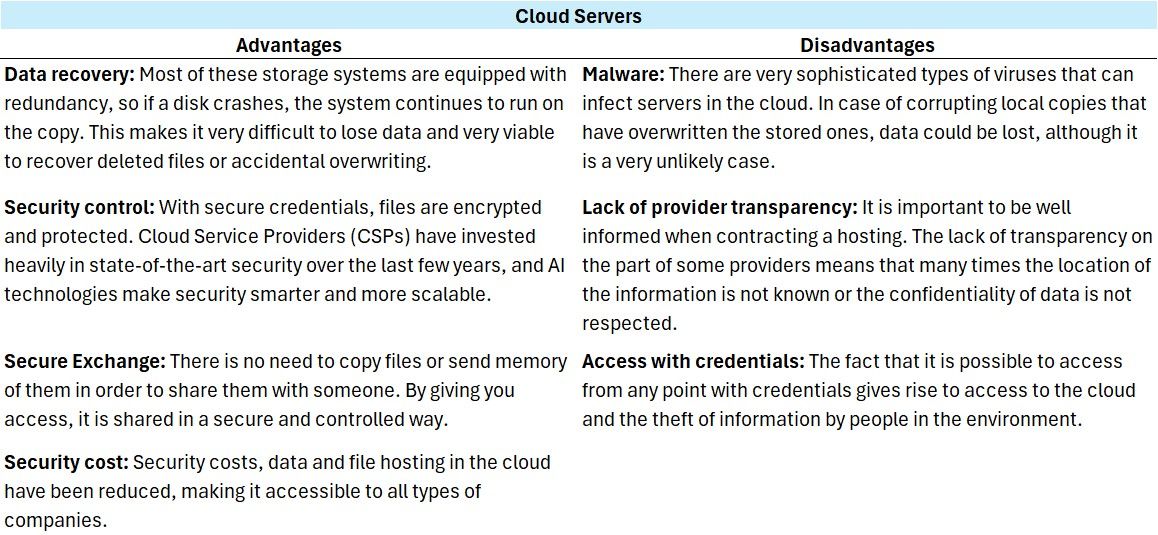
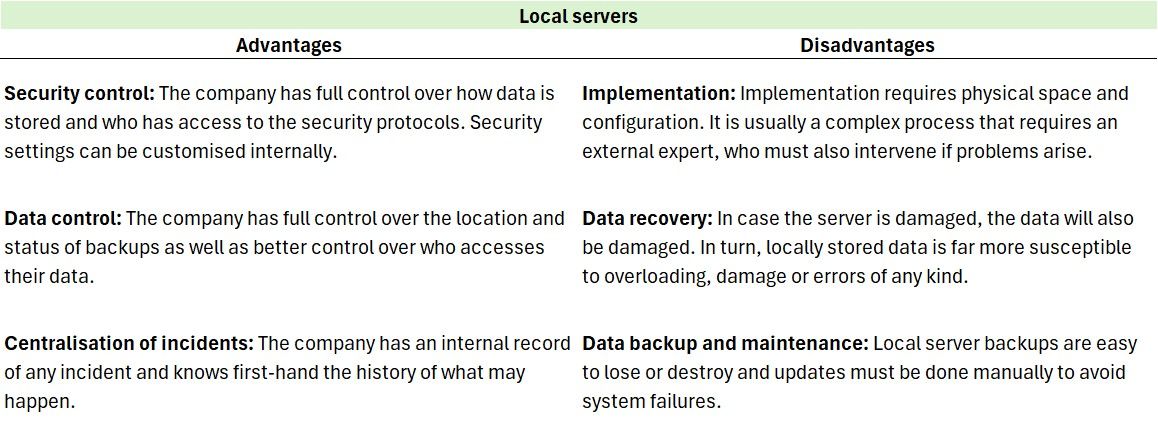
Why is the cloud server the server of the future?
In terms of security, the cloud is a much more resilient environment with additional layers of security compared to more traditional local servers. This happens as long as a number of conditions are met, we will discuss them below:
A cloud server is highly secure as long as the company using it is secure. Enterprises need to take the initiative to enable the security controls offered by CSPs and ensure that these providers have relevant policies in place and keep devices up to date to ensure data security.
This data storage system, in addition to surpassing traditional ones in terms of security, is a highly scalable model. The scalability scheme of the cloud servers is superior to any other infrastructure we have seen in the past.