


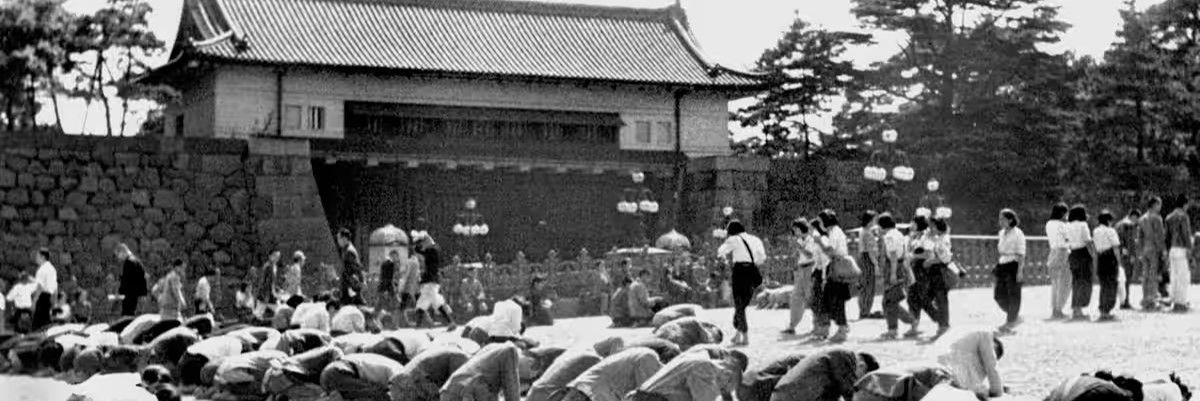
August 15, 1945 marks the day Japan formally announced the end of the war to its citizens, a date now observed as End of War Memorial Day in Japan, as well as Liberation Day in South Korea and North Korea, and V-J Day in the United Kingdom.
At that time, global logistics had fallen into severe dysfunction due to the destruction of ports, vessels, and railways, maritime blockades, and occupation policies. In the Pacific theater, the U.S. military developed mobile supply systems that did not rely on fixed ports innovations that later became the foundation of modern logistics. After the war, newly established international institutions helped rebuild the world’s transportation and trade networks.
The State of Global Logistics During the Final Phase of WWII and Immediately After the War
Logistics during the end of World War II bore little resemblance to today’s international trade or commercial transport. The world was experiencing unprecedented disruption.
Collapse of Global Transport Networks
World War II is often described as a “war of logistics,” where supply chains determined the course of battles. By the final months of the war, severe disruptions were occurring worldwide:
- Destruction of ports, railways, and warehouses Major European ports such as Hamburg and Rotterdam were devastated by air raids, halting logistics operations.
- Dangerous maritime transport In the Atlantic, German U-boats continued attacking merchant vessels, drastically reducing shipping capacity.
- Reorganization of Asian trade routes Japan’s occupation policies disrupted existing trade flows in China and Southeast Asia, diverting resources primarily to the Japanese mainland.
Japan’s Logistics Situation in 1945
Japan faced extreme logistical challenges in the final phase of the war:
- Catastrophic loss of ports and vessels U.S. air raids destroyed port facilities, and most merchant ships were sunk.
- Domestic transport paralysis Railways and roads were heavily damaged, making internal movement of goods extremely difficult.
- Severe shortages of food and fuel Maritime blockades halted imports, and domestic logistics prioritized military needs over civilian supply.
Unique Logistics in the Pacific Theater (Military Supply Chains)
To sustain operations across vast oceanic distances, the U.S. military developed innovative supply systems that did not rely on traditional ports:
- Underway Replenishment Techniques enabling ships to receive fuel and ammunition without stopping.
- Floating docks and mobile repair fleets Systems allowing repairs and resupply at sea during island campaigns where fixed ports were unavailable.
These innovations laid the groundwork for modern naval logistics.
Rebuilding Global Logistics After the War
Following the devastation, the world began reconstructing its logistics networks through new international frameworks:
- Bretton Woods System (1944) Establishment of the IMF and World Bank to stabilize global trade.
- GATT (1947) Creation of rules governing tariffs and trade, supporting postwar economic recovery.
Through these cooperative efforts, the shattered global transport system gradually regained functionality.
Transition Toward Digital Logistics
The history of wartime collapse and postwar reconstruction highlights how deeply modern logistics depends on peace and international cooperation. Today, the logistics industry is once again at a major turning point.
Where postwar recovery focused on rebuilding physical infrastructure ports, ships, and railways the 21st century is defined by the rise of digital infrastructure as the core driver of competitiveness.
AI-powered demand forecasting, blockchain-based traceability, IoT-enabled real-time visibility, and innovations such as electronic bills of lading (eBL) and digital customs clearance are ushering in an era where the flow of information and the flow of goods are fully integrated.
What was once a world divided by war is now connected seamlessly through digital technologies, forming the backbone of resilient and agile supply chains.
Eighty years after the end of the war, global logistics continues to evolve from destruction to reconstruction, and now toward digital transformation overcoming historic turning points and advancing into the future.