
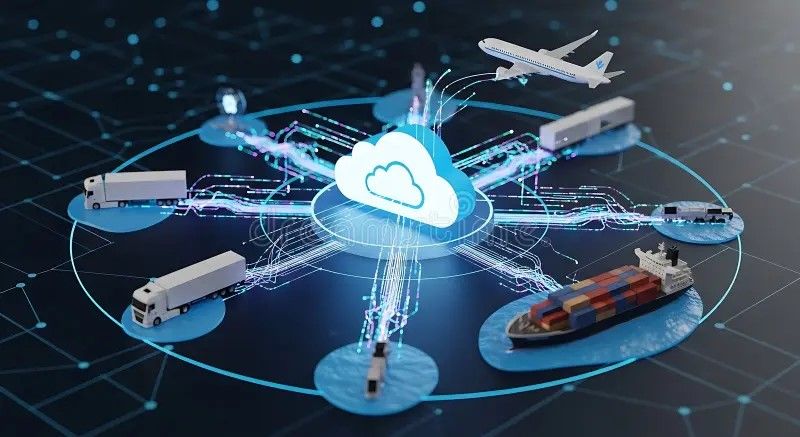
The logistics industry is undergoing one of the fastest transformations in its history. AI, data integration, supply chain visibility, port digitalization every major innovation shaping the future of logistics has one thing in common:
They all depend on the cloud.
Today, the question is no longer “Should we use the cloud?” It’s “Can we stay competitive without it?”
In this article, we explore why the cloud has become the backbone of logistics operations, and why companies that fail to adopt it will inevitably fall behind.
1. Logistics Runs in Real Time, and Only the Cloud Can Keep Up
Logistics is a real‑time industry. Every decision depends on what is happening right now:
- Truck locations
- Container gate‑in/gate‑out
- Vessel arrival and departure
- Customs clearance status
- Factory production schedules
- Weather, traffic, and port congestion
To process and synchronize this constant flow of information, companies need:
- High‑speed computing
- Instant data updates
- Multi‑location access
- Scalable infrastructure
These requirements simply cannot be met by on‑premise systems. The cloud is the only environment capable of delivering real‑time logistics at scale.
2. Logistics Is a Multi‑Company Ecosystem, and the Cloud Is the Only Way to Connect It
No logistics operation works alone. Every shipment involves a network of players:
- Manufacturers
- Warehouses
- Trucking companies
- Freight forwarders
- Shipping lines
- Customs authorities
- Ports
- Industrial parks
- End customers
To connect all these stakeholders, API integration is essential. And APIs require cloud‑based platforms to operate securely and reliably.
On‑premise systems struggle with:
- External connectivity
- Security risks
- Version control
- Data standardization
The cloud acts as the “common language” of logistics. Without it, companies simply cannot integrate with partners.
3. Logistics Demand Fluctuates, and the Cloud Scales Instantly
Logistics is full of unpredictable spikes:
- End‑of‑month shipment surges
- Seasonal production peaks
- Port congestion
- Sudden customs delays
- Weather disruptions
Cloud infrastructure automatically scales up or down based on demand. On‑premise servers cannot do this. They run out of capacity, slow down, or fail.
The cloud absorbs volatility. This makes operations more stable, efficient, and cost‑effective.