



The main advantages of the Blockchain technology are decentralized network, transparency, trusty chain, unalterable and indestructible technology. In turn, the main disadvantages of the Blockchain are the high energy dependence, the difficult process of integration and the implementation's high costs.
Here’s a list of the top 6 pros and cons of blockchain technology which will be followed by details below:
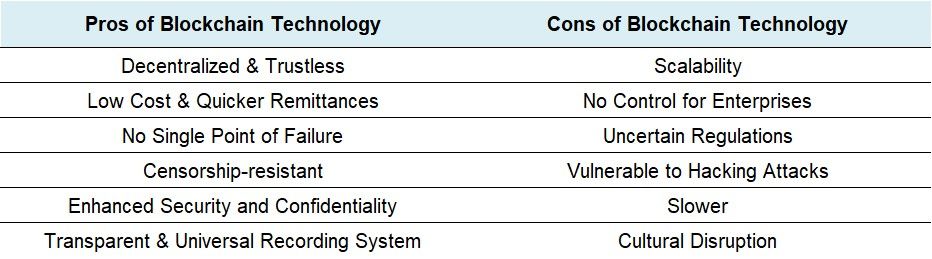
On the plus side, blockchain transactions take place without the approval or involvement of third parties. You can make a crypto investment without hiring an investment advisor. You can make a purchase without a bank to process your credit or debit card payment. You can lend or borrow funds without the involvement of expensive financial institutions. Because you don’t need the approval of banking executives or financial professionals, you can execute transactions in minutes instead of days or weeks. That’s a big advantage of using the open ledger feature of blockchain technology.
Today’s most widely used blockchains are not suitable for the widespread deployment of applications and services. The Bitcoin and Ethereum blockchains handle fewer than 50 transactions per second. Technology solutions are on the horizon, but limited scalability remains a significant disadvantage that compromises the performance of current blockchain apps.
Blockchain technology is complex and new. That means that blockchain-ready software engineers are in short supply. That makes blockchain-based apps expensive to develop and maintain. Blockchain technology is already having an obvious impact on the world economy and financial policies. But some of the consequences are harder to see. Efficient blockchain-based apps could replace workers in some sectors, contributing to unemployment rates. And of course the crypto market’s volatility is having a larger and larger impact on world financial markets as crypto is more widely adopted.
It is a cutting-edge technology providing decentralized data storage and transmission. Even though it has some drawbacks, most can be overcome with proper development and implementation. While public blockchains cater to general public offering services and solutions without intermediaries and data abuses, hybrid or consortium blockchains can be considered for enterprises.