


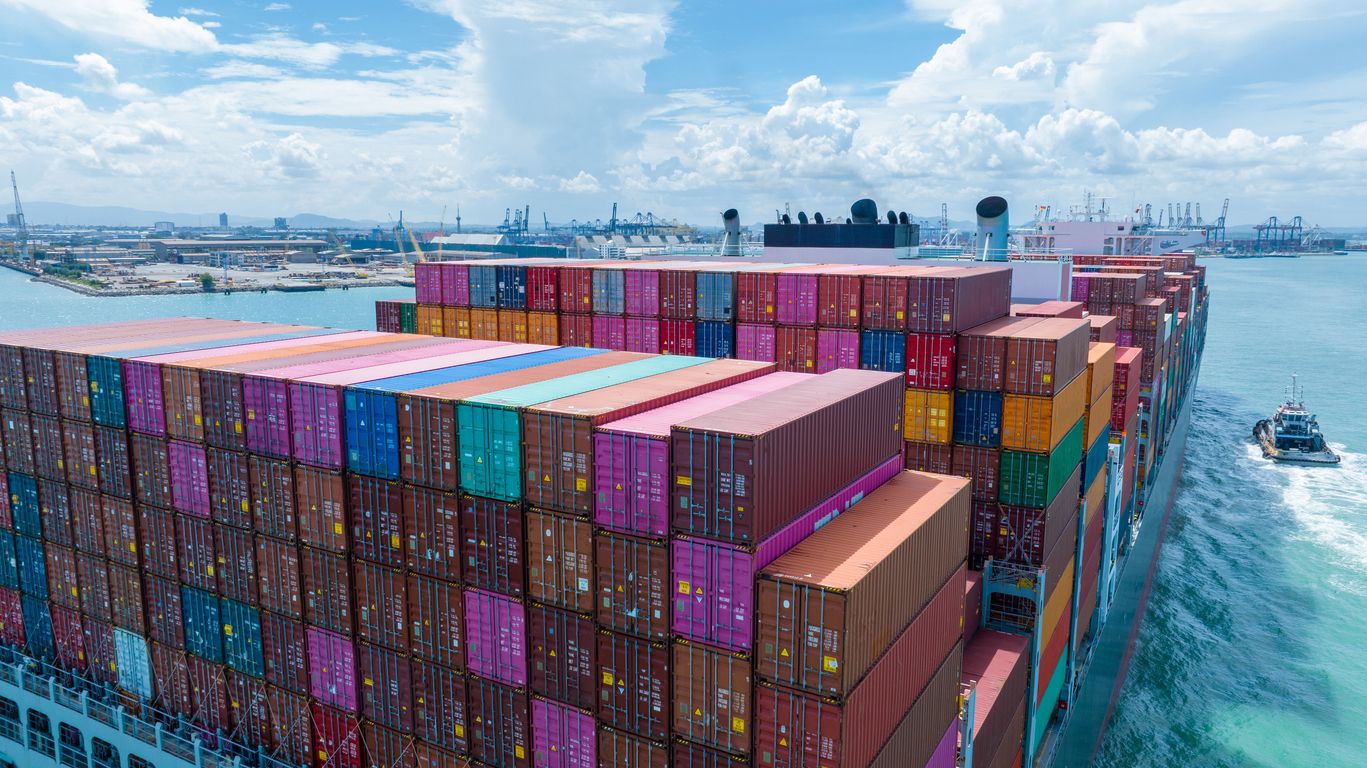
Container shipping rates saw a significant 10.52% increase over the past month as of April 2026, with a 39.97% rise compared to the same period last year. Driven by severe capacity constraints from Red Sea disruptions, vessel detours around the Cape of Good Hope, and high port congestion particularly in Singapore spot rates have surged.
Recent Container Rate Trends (April 2026)
- Global Average: Drewry World Container Index fell slightly (−1%) to $2,232 per 40ft container, mainly due to weaker Asia–Europe rates.
- Transatlantic Route: Rates surged +15% to $2,326, driven by reduced vessel capacity and a new $1,100 Peak Season Surcharge (PSS).
- Transpacific Route: Shanghai–Los Angeles spot rates rose +4% to $2,934, still below past peak levels.
Key Drivers Behind Price Movements
- Capacity Crunch: Vessel diversions away from the Red Sea/Suez Canal have lengthened voyages, reducing container availability.
- Port Congestion: Major hubs like Singapore face 2–3 day berthing delays due to clustered ship arrivals, worsening shortages.
- Rising Container Prices: In Singapore, 40ft high-cube container prices jumped 26% (from $1,499 in Oct 2023 to $1,890 in May 2024).
- Surcharges & Extra Costs: Shipping lines are applying new fees, with some routes seeing 25% higher freight rates plus fuel surcharges.
Despite a modest global dip in average container rates, regional surges are significant especially on the Transatlantic route. The combination of vessel diversions, port congestion, and added surcharges is creating a capacity-driven price spike, with Singapore standing out as a hotspot for rising container costs.
Key Factors to Watch in H2 2026
- Vessel Glut: Global fleet capacity has expanded by 28% since 2021. This massive supply of new ships outpaces demand growth (estimated at only 2-3%), forcing carriers into a "rate defense" strategy rather than aggressive hikes.
- Environmental "Green" Surcharges: Starting in late 2026, new IMO 2026 regulations and the expansion of the EU ETS carbon tax will add $150 to $400 per container in structural costs. This acts as a "price floor," preventing rates from crashing back to pre-2020 levels.
- The "Red Sea Factor": Any sudden stabilization in the Middle East that allows ships to return to the Suez Canal will instantly inject more capacity into the market, likely triggering a sharp, short-term rate collapse.
- Agile Contracting: Procurement experts recommend a hybrid strategy for late 2026 locking in 40% of volume via contracts for stability while keeping 60% on the spot market to capitalize on falling prices.
Source: