
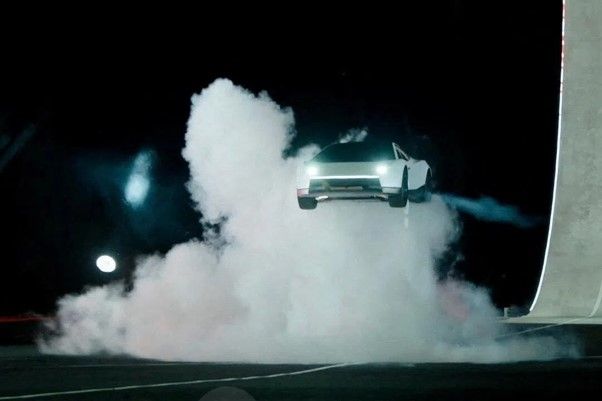
Tesla's latest Roadster announcement grabbed headlines with an extraordinary claim: a production EV equipped with SpaceX-inspired thrusters capable of delivering unprecedented acceleration and even limited airborne maneuverability.
The spectacle is attention-grabbing. But for supply chain, customs, and compliance professionals, the real story may be somewhere else.
If aerospace-derived technologies start appearing in road vehicles, the boundaries between industries begin to blur. And whenever boundaries blur, supply chains become more complex.
When Automotive Meets Aerospace
For decades, automotive and aerospace supply chains have operated under very different assumptions. Automotive supply chains are optimized for scale, cost efficiency, and millions of units. Aerospace supply chains prioritize certification, traceability, reliability, and strict regulatory oversight.
A Roadster equipped with SpaceX-inspired thruster systems would sit somewhere between the two.
Such vehicles could require:
- High-pressure gas storage systems
- Aerospace-grade valves and regulators
- Advanced lightweight materials
- Specialized sensors and control systems
- Additional safety and certification processes
For suppliers, this creates opportunities but also introduces complexity. Companies familiar with aerospace standards may find new opportunities in automotive programs, while traditional automotive suppliers may face higher compliance requirements.
A New Challenge for Trade Compliance
Emerging technologies rarely fit neatly into existing regulatory categories. A component originally designed for aerospace applications may be integrated into a road vehicle. The question then becomes:
How should it be classified?
This is where customs, tariff classification, and trade compliance become increasingly important.
Organizations could face questions such as:
- Is the component an automotive part or an aerospace part?
- Which tariff classification applies?
- Are export controls relevant?
- What documentation is required for international movement?
These questions are not theoretical. They directly affect duties, compliance obligations, shipping processes, and regulatory risk.
Why AI Matters
As products become more technically sophisticated, classification decisions become harder. Traditional rule-based approaches often struggle when a product combines characteristics from multiple industries. This is where AI-driven compliance systems can create significant value.
Modern AI architectures combining:
- Retrieval-Augmented Generation (RAG)
- Regulatory knowledge bases
- Document intelligence
- Expert review workflows
can help compliance teams navigate increasingly complex products. The goal is not to replace experts. The goal is to help experts make faster, more consistent, and more defensible decisions based on evidence.
The Bigger Trend
Regardless of whether Tesla's thruster-equipped Roadster reaches large-scale production, it highlights a broader trend:
Products are becoming multidisciplinary
Automotive products include software. Industrial equipment includes AI. Vehicles increasingly incorporate aerospace-inspired technologies. As innovation crosses industry boundaries, supply chains, customs processes, and compliance frameworks must adapt. For organizations operating globally, the winners will not simply be those who build new technologies.
They will be those who can classify, regulate, govern, and move those technologies efficiently across borders.
Final Thought
The most important implication of Tesla's latest Roadster may not be how fast it accelerates.
It may be that it demonstrates a future where the lines between industries continue to disappear, creating new challenges for supply chain management, customs classification, and regulatory compliance.
At HAKOVO, we believe AI will play a critical role in helping businesses navigate this growing complexity, turning regulatory knowledge into actionable intelligence across the global supply chain.