
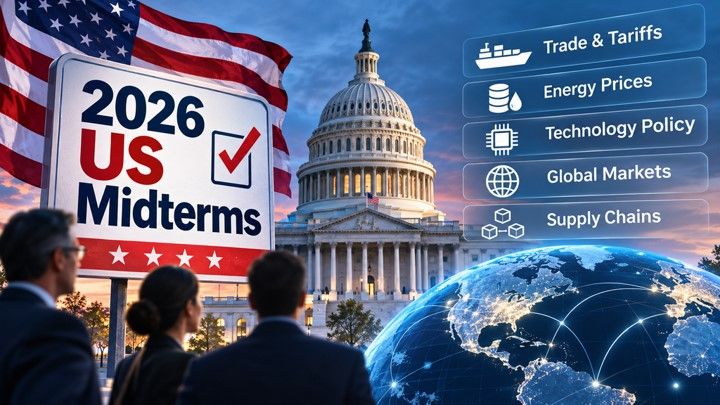
The U.S. midterm elections determine the balance of power in Congress during the second half of a president’s four-year term. Although the president is not on the ballot, the results can influence the administration’s ability to advance its trade, energy, and economic policies.
For businesses, the main issue is not simply which party wins. It is how the new Congress may support, restrict, or reshape President Donald Trump’s policy agenda.
Supply-Chain Impact
Tariffs and trade restrictions are likely to remain major concerns. Higher tariffs could raise the landed cost of imported components, raw materials, and finished products. Companies may respond by:
- Diversifying suppliers and reducing dependence on one country
- Expanding “China plus one” strategies
- Increasing safety stock before policy changes
- Moving production closer to major markets
- Strengthening customs and origin documentation
Southeast Asia could benefit from greater manufacturing diversification. However, companies must also prepare for stricter rules of origin and closer scrutiny of transshipment activities.
Oil-Price Impact
The election itself will not directly determine oil prices. However, related trade, energy, sanctions, and foreign-policy decisions could influence the market.
Two opposing scenarios are possible:
- Higher geopolitical risk could threaten supply and push oil prices upward.
- Slower trade and economic activity could weaken energy demand and put downward pressure on prices.
For companies, oil-price volatility may be more important than predicting a single price direction.
Logistics Impact
Tariff deadlines may cause importers to bring shipments forward, temporarily increasing freight demand, port congestion, and warehouse requirements. This could be followed by weaker cargo volumes after the initial rush.
Supply-chain diversification may also create new trade routes across Southeast Asia, India, Mexico, and other markets. Meanwhile, higher fuel prices could increase the cost of ocean freight, air cargo, and trucking.
Singapore may benefit from stronger demand for regional distribution, transshipment, customs support, and supply-chain management. At the same time, it remains exposed to weaker global trade and higher energy costs.
Conclusion
The U.S. midterm elections could influence global business through changes in trade, energy, and foreign policy. Companies should not rely on one political forecast. Instead, they should diversify suppliers, review tariff exposure, strengthen origin documentation, and develop alternative logistics routes. In an uncertain policy environment, flexibility and supply-chain visibility will be the most valuable competitive advantages.