


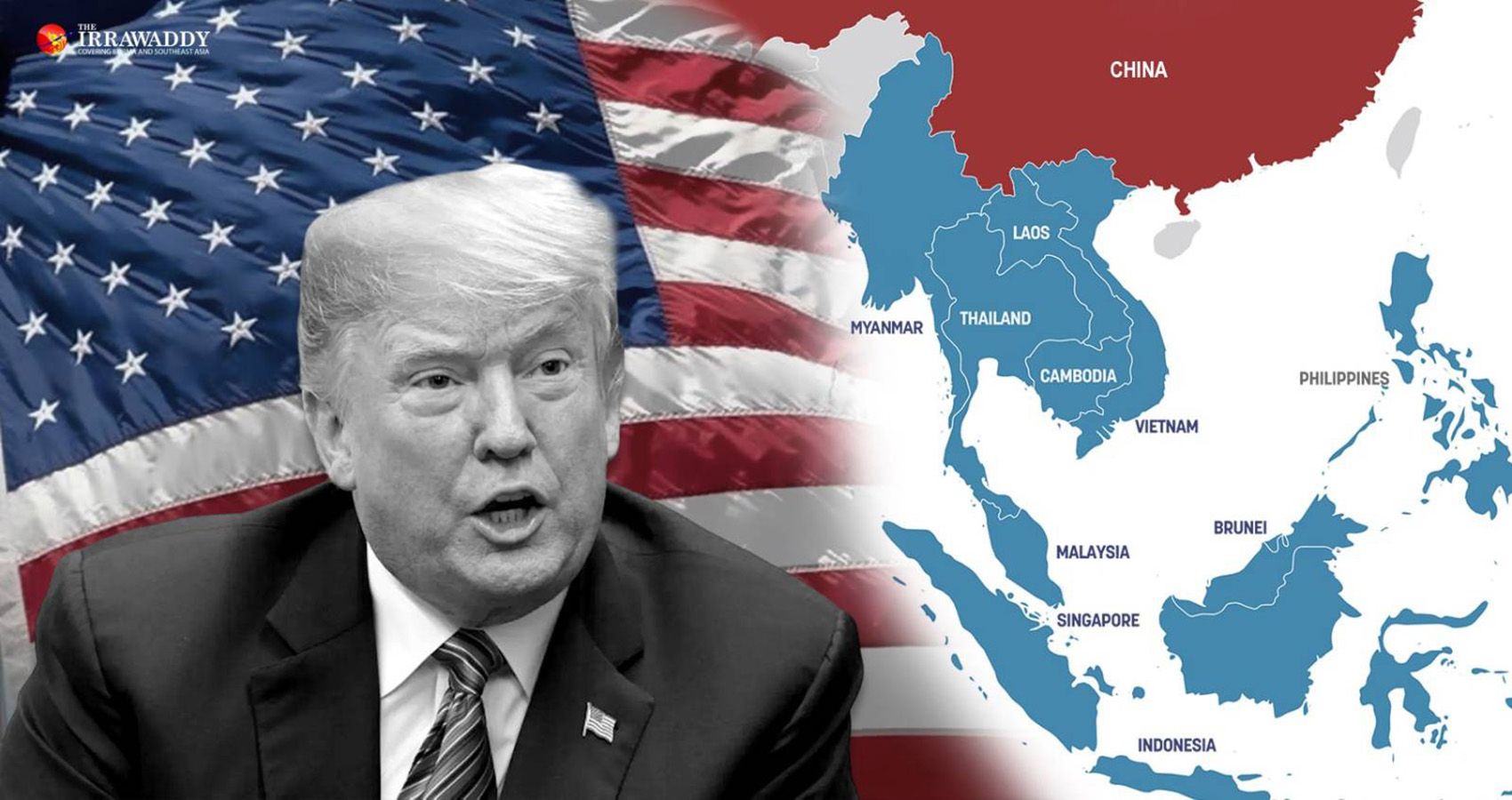
Member states of the Association of Southeast Asian Nations (ASEAN) recognize they may be greatly affected by Trump's hardline stance toward China, his claims to quickly end the war in Ukraine, his expected emphasis on striking bilateral trade "deals," and his demands that allies share a bigger defense burden. Southeast Asian countries navigated Trump 1.0 relatively well and hope they can do the same with Trump 2.0. However, the region should guard against complacency because Trump 2.0 will be far more emboldened and unrestrained.
US Trade for ASEAN:
Trump’s proposed tariff hikes on Chinese imports — and products with significant Chinese components — combined with the threat of Chinese retaliation, would significantly heighten the risk that the world’s two largest economies may decouple. ASEAN economies, of which China and the US are the largest trading partners, would be caught in the middle. ASEAN exports to the US rely heavily on Chinese intermediate goods (not to mention the re-routing and relabelling of Chinese goods going to the US via Southeast Asia) and Chinese exports to the US also use raw materials and intermediate goods from ASEAN. A sharp decline in Chinese exports to the US would also negatively impact Southeast Asian exports to China, which in turn would affect overall regional economic performance. In sum, the globalisation model that Southeast Asia has long depended on for growth faces an increasingly uncertain future.
No Interest in Multilateralism:
Trump withdrew from the Trans-Pacific Partnership (TPP) shortly after he entered office, disappointing many in ASEAN who had looked forward to US leadership in advancing multilateral economic cooperation in the Asia-Pacific. The president showed no personal interest in ASEAN's multilateralism, moreover, and betrayed the region's expectations by never attending the East Asia Summit during his term and never getting around to appointing an ambassador to ASEAN or to Singapore*.
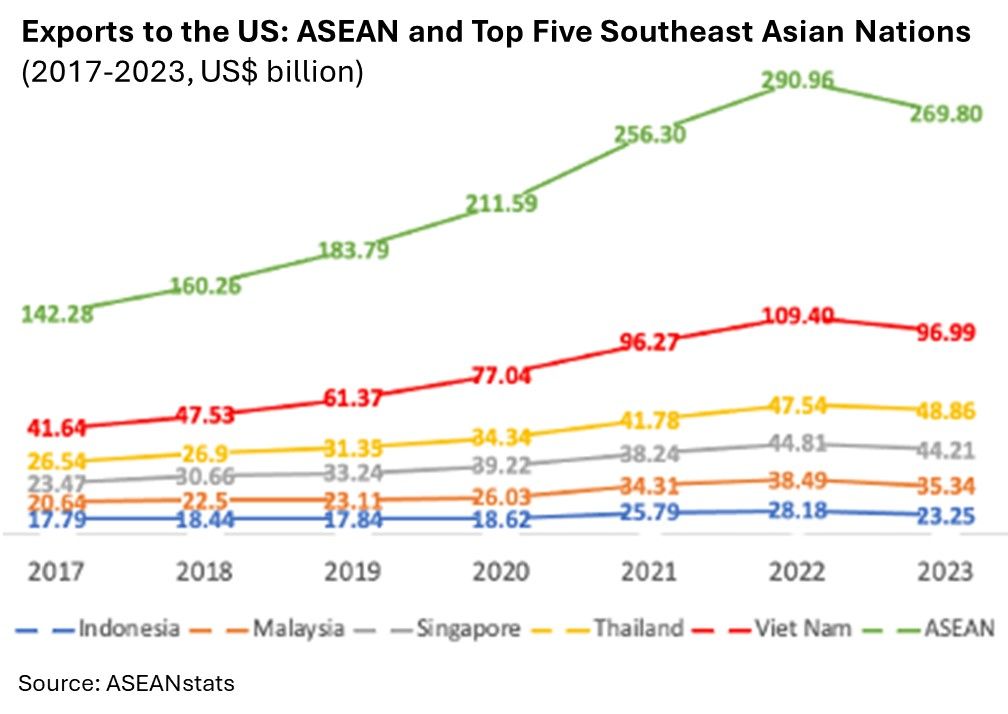
ASEAN countries benefited economically from the US-China trade war, as many companies, including Chinese firms, shifted production to ASEAN to avoid tariffs on Chinese imports to the US market, resulting in a robust expansion of US-ASEAN trade.
Trump's Second Term:
Trump can hardly be expected to engage with ASEAN's multilateralism, and he may very well abandon the Indo-Pacific Economic Framework (IPEF) advanced by the Biden administration*.
ASEAN as a whole is unlikely to fully align with China. Countries in the continental region like Laos, Cambodia, and Myanmar are already inclined toward China, and this tendency will likely grow, but there are also coastal states that have territorial disputes with China in the South China Sea. There is no consensus within ASEAN on the desirability of Chinese predominance in the region. US military engagement is still seen as necessary, and US corporate investment will continue to be essential for the region's economic development. Trump's wheel-and-deal approach will pose a major challenge, but ASEAN will seek to maintain good relations with Washington. For this, too, ties with other major countries, including Japan, will play an ever-bigger role.