
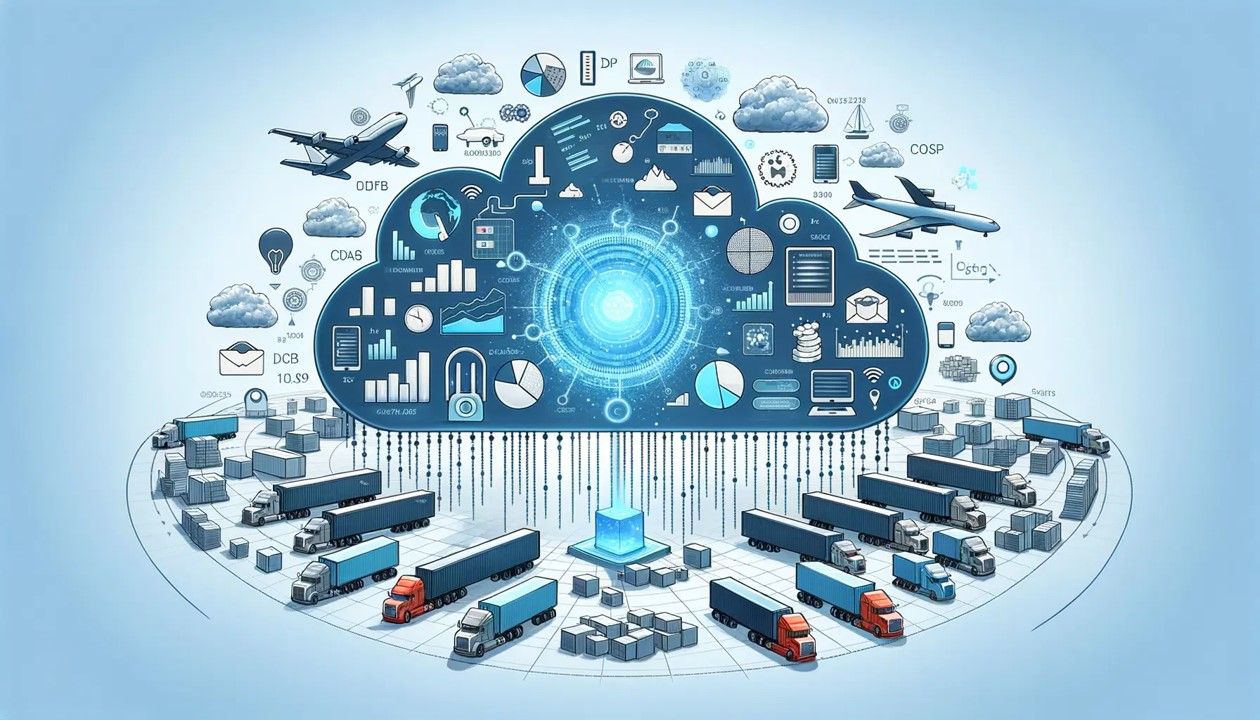
In my previous article, I explained why the cloud has become the foundation of modern logistics. Real‑time operations, multi‑company integration, scalability, and global collaboration—none of these are possible without cloud infrastructure.
But that was just the starting point.
As logistics networks become more complex and supply chains stretch across borders, the cloud is no longer simply a tool for efficiency. It has evolved into the central nervous system of the entire logistics ecosystem.
In this second part of the series, we go deeper into the capabilities that truly transform logistics operations.
4. Visibility Is the Heart of Logistics, and the Cloud Makes It Possible
Modern logistics depends on visibility:
- Real‑time truck tracking
- Container status updates
- Vessel ETA predictions
- Customs progress
- Production‑to‑shipment synchronization
- CO₂ emissions monitoring
- Port congestion dashboards
To unify all this data into a single view, companies need:
- A cloud data lake
- Real‑time dashboards
- Unified data pipelines
On‑premise systems cannot provide this level of visibility. The cloud turns fragmented data into actionable intelligence.
5. AI Is Transforming Logistics, and AI Lives in the Cloud
AI is no longer optional in logistics. It powers:
- Demand forecasting
- Route optimization
- Berth allocation
- Truck appointment optimization
- CO₂ emissions calculation
- Digital twins of ports and factories
These models require:
- GPU computing
- Large datasets
- Continuous model updates
- High‑speed inference
All of this happens in cloud AI platforms like Azure ML, AWS SageMaker, and Google Vertex AI.
On‑premise AI is slow, expensive, and nearly impossible to maintain. Cloud AI is the future of logistics optimization.
6. Logistics Is National Infrastructure, and the Cloud Provides Superior Security
Security is critical in logistics because it touches national supply chains.
Cloud platforms offer:
- SOC monitoring
- WAF protection
- DDoS defense
- Zero‑trust architecture
- Automatic patching
- Encryption
- Audit logs
On‑premise systems often lack the manpower and expertise to maintain this level of protection.
The cloud is not only faster, it is safer.
7. Logistics Is Global — and the Cloud Connects the World
Logistics crosses borders every day:
- Global shipping lines
- International suppliers
- Multi‑country factories
- Cross‑border customs
- Worldwide distribution networks
Cloud platforms allow all stakeholders to access the same system from anywhere in the world, in any time zone, on any device.
Global logistics requires global infrastructure. That infrastructure is the cloud.
Logistics DX cannot exist without the cloud
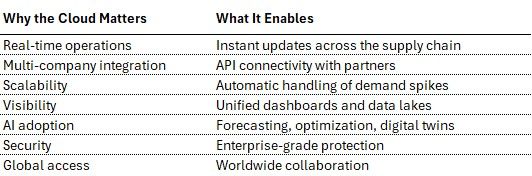
The cloud is not just an IT choice. It is the foundation of modern logistics competitiveness.
Companies that embrace it will accelerate. Companies that resist it will be left behind.